
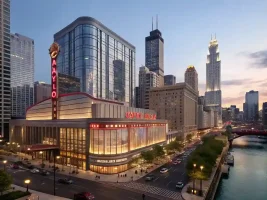
Bally’s Chicago was supposed to be the long-awaited answer to a question the city had been asking for decades: when would Chicago finally get a full-scale casino of its own? The temporary venue at Medinah Temple gave the project a public face, but the real test has always been the permanent resort on the former Tribune Freedom Center site along the Chicago River. That is the version expected to reshape River West, bring in larger gaming revenue, add hotel rooms, create thousands of jobs and give the city a new stream of money for public needs.
The simple answer to the 2026 deadline question is now much less optimistic than it once was. Bally’s Chicago has made visible construction progress, including a major structural milestone, but the permanent casino no longer looks likely to open in 2026. The clearest current signal points to spring 2027, which means the project is moving, but not on the timetable that officials and residents were originally told to expect.
Why the 2026 deadline became difficult
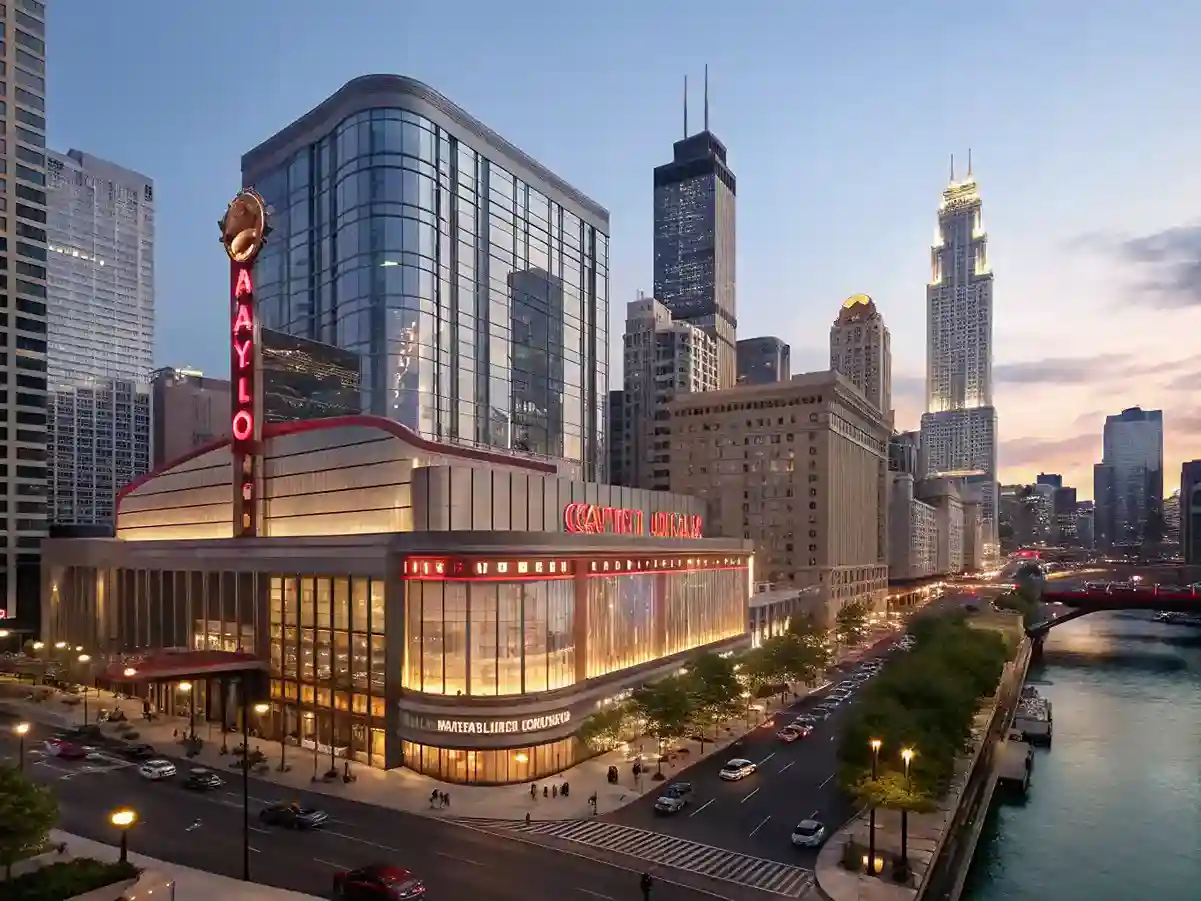
The September 2026 target was never just a marketing phrase. It mattered because Chicago’s casino plan was tied to jobs, tax revenue and political promises. When Bally’s won the right to build the city’s first casino, the permanent property was expected to become a major urban resort rather than a simple gaming hall. That kind of project is hard to deliver quickly even in a smooth construction cycle. In this case, the path has been anything but smooth.
The permanent site sits on valuable riverfront land that was previously occupied by the Chicago Tribune’s printing facility. Transforming that land into a casino, hotel and entertainment complex required demolition, redesign, infrastructure planning, financing and regulatory approvals. Each of those steps added pressure to the schedule. A casino can open only when the building is finished, licensed, staffed, inspected and ready for daily operations. A delay in one stage can push the entire project forward.
The biggest issue is that the project changed while the clock was already running. Bally’s revised its site plan and restored the 500-room hotel tower into a single-phase development. From a guest perspective, that is a stronger long-term plan because it avoids opening a reduced version of the resort and waiting for the hotel later. From a construction perspective, it adds complexity. Building the casino, hotel, food venues, entertainment space and riverfront improvements together makes the opening more impressive, but it also leaves less room for mistakes.
The financing story also affected confidence in the schedule. Bally’s secured outside backing from Gaming and Leisure Properties, a major move that helped the project continue at scale. That reduced one major risk, but it did not erase the time already lost. Large financing agreements can stabilize a project, yet they do not instantly recover months spent on redesigns, demolition hurdles and approval work.
The result is a timeline that looks logical on paper but strained in practice. A full casino resort on a former industrial site in the middle of Chicago needs more than walls and gaming machines. It needs access routes, public safety coordination, utility work, traffic planning, environmental management, interior buildout, staff training and final sign-offs. By early 2026, it was already clear that September 2026 had become a narrow window rather than a comfortable target.
What is happening at the permanent site
The strongest argument in Bally’s favor is that the project is no longer theoretical. Construction is real, visible and advanced enough to change the conversation from “will it be built?” to “when will it open?” That is an important difference. For a long time, doubts around Bally’s Chicago focused on whether the company could secure financing, settle design issues and move beyond temporary operations. The site now shows a more concrete answer: the permanent casino is being built.
The topping-off milestone gave the project a symbolic boost. When the final structural beam is placed, it does not mean guests are close to walking through the doors, but it does mean the main frame has reached a serious stage. For public officials and Bally’s executives, that moment allowed them to present the casino as a project that had survived its most uncertain period.
Still, a topped-off building is not an opened resort. The remaining work is often less visible but just as demanding. Interior construction, mechanical systems, electrical systems, gaming floor installation, restaurant buildouts, hotel room completion, safety inspections and employee preparation can take many months. A casino is also different from a normal commercial building because the gaming area must meet strict regulatory standards before operations begin.
The permanent Bally’s Chicago plan is large enough to explain why the final stretch could not be rushed. The resort is expected to include thousands of slot machines, well over a hundred table games, a hotel tower, restaurants, entertainment space and a riverfront setting designed to connect more naturally with the surrounding neighborhood. That is a much broader operation than the temporary casino at Medinah Temple.
The current state of the project can be understood through a few major signals rather than one headline date.
| Area | What it means for the opening timeline |
|---|---|
| Structural progress | The project has moved beyond demolition and early site work, which reduces the risk of a complete stall. |
| Hotel tower included | A stronger full resort plan adds value, but it also increases the amount of work needed before opening. |
| Temporary casino extension efforts | Bally’s wants flexibility to keep Medinah Temple operating if the permanent venue is not ready in 2026. |
| Financing support | Construction funding improved confidence, but it did not fully repair earlier schedule pressure. |
| Public statements | Recent comments and announcements point more clearly toward early or spring 2027 than a 2026 launch. |
This mix of signals makes the situation easier to read. Bally’s Chicago is not frozen, abandoned or purely speculative. The more realistic issue is that the permanent resort appears to be running beyond the original deadline. A project can be healthy and still late, and that is the most accurate way to describe Bally’s Chicago now.
Why the temporary casino matters
The temporary Bally’s Chicago casino at Medinah Temple was designed as a bridge. It allowed the city to start collecting money before the permanent resort opened, gave Bally’s a way to build a local customer base and kept Chicago’s casino plan visible while the riverfront site was prepared. Without it, the city would have had to wait years for any casino revenue at all.
The problem is that a temporary casino has limits. Medinah Temple is a historic and recognizable building, but it is not the full resort Chicago was promised. It does not have the same scale, hotel integration, entertainment package or riverfront development potential. Its performance has also been watched closely because the city’s long-term expectations depend on the permanent property producing much stronger numbers.
That is why the temporary license matters so much. If the permanent casino cannot open before the temporary authorization expires, Bally’s needs legal and regulatory room to keep operating at Medinah Temple. Otherwise, Chicago could face an awkward gap: the temporary casino closes, the permanent casino is not ready, and revenue stops at the worst possible moment.
The request for more time does not automatically prove the permanent casino is in trouble. It does, however, show that Bally’s and lawmakers understand the risk. A company confident in a firm 2026 opening would not need as much backup flexibility. The extension effort is best read as insurance against a schedule that has already become too tight.
For readers trying to understand whether Bally’s Chicago will open on time, the temporary casino is one of the clearest clues. When a developer seeks the ability to keep a temporary venue open longer, it usually means the permanent opening date is not fully secure. In this case, the public conversation has already shifted away from a clean 2026 arrival and toward a more practical 2027 handoff.
There are several reasons the temporary operation remains important while construction continues:
- It keeps casino tax revenue flowing while the permanent resort is unfinished.
- It gives Bally’s time to train staff and maintain a Chicago customer base.
- It reduces the risk of a full operational gap before the riverfront casino opens.
- It gives lawmakers and regulators a practical solution if construction runs past the old deadline.
- It keeps public attention on the casino brand even before the larger resort is ready.
The temporary casino is not the final product, but it has become a pressure valve. Its continued operation could make a delayed permanent opening less damaging for the city, Bally’s employees and local budget planning. Without that bridge, the political cost of missing 2026 would be much higher.
What a 2027 opening would mean for Chicago
A move from 2026 to 2027 is not just a calendar adjustment. It changes expectations for city revenue, neighborhood planning, hiring and public confidence. Chicago has treated the casino as a meaningful financial tool, especially because casino money has been linked to public obligations. When the main project moves later, the city has to wait longer for the larger revenue stream attached to the permanent resort.
That delay matters because the permanent casino is supposed to perform at a different level than Medinah Temple. The riverfront complex will have more gaming positions, more amenities and a broader entertainment draw. It is designed to bring in not only local gamblers but also visitors who may combine casino gaming with restaurants, hotel stays, shows and downtown tourism. The temporary site cannot fully test that model.
For River West, a 2027 opening also extends the period of construction disruption. Large urban projects affect traffic patterns, noise, pedestrian movement and nearby businesses. Residents and local workers may support the long-term investment but still feel the burden of a prolonged buildout. The sooner the project opens, the sooner the area can move from construction inconvenience to operating benefits.
A 2027 opening may also give Bally’s a better chance to launch the property properly. A rushed 2026 opening could create its own problems if the building were technically open but incomplete in guest experience. Casino customers notice weak food options, unfinished hotel services, confusing access points and poor staffing. In a competitive regional gaming market, a disappointing launch can damage reputation early.
That is the trade-off Chicago faces. Opening late is politically uncomfortable, but opening before the resort is truly ready could be worse. The permanent Bally’s Chicago has to serve several audiences at once: gamblers, hotel guests, tourists, workers, city officials, neighborhood residents and investors. A few extra months may be easier to defend if they produce a more complete property.
The larger question is whether the delay remains controlled. A spring 2027 opening is one thing. A vague date that keeps sliding deeper into 2027 would be another. At the moment, the project has enough visible progress to support the idea of a defined delay rather than an open-ended one. That distinction is important. Chicago can absorb a missed 2026 opening more easily if the new date is credible and the temporary casino continues operating.
The business risks behind the delay
Bally’s Chicago is not only a construction project. It is also a financial bet. The permanent resort carries a multibillion-dollar level of importance when construction cost, financing, future revenue and public commitments are considered together. That makes the schedule more sensitive. Every extra month before opening can affect revenue expectations, financing pressure and public trust.
The company’s challenge is to prove that the delays are manageable rather than structural. Some delays are common in major urban construction. Others signal deeper problems. Bally’s has faced redesign needs, financing scrutiny, construction interruptions and regulatory attention. None of those issues alone means the project will fail, but together they explain why observers have become more cautious.
Competition adds another layer. Chicago is not building this casino in isolation. Illinois and the surrounding region already have casino options, and the gaming market has changed since the early political push for a Chicago casino. Customers have more entertainment choices, sports betting is widely available, and video gambling has become part of the broader gaming discussion. Bally’s permanent resort must be strong enough to pull people into a physical destination, not just offer more slot machines.
That is why the hotel, restaurants, theater and riverfront design matter. The casino floor will drive much of the revenue, but the resort must feel like a place worth visiting. Chicago does not need a generic box with gaming tables. It needs a property that can compete for nights out, weekend trips, conventions, dining traffic and entertainment spending. The delay is easier to justify if the final product feels like a complete urban resort.
There is also a reputational risk. Chicago’s casino search took many years, and the public has heard big promises before. When a project with this much attention misses targets, skepticism grows quickly. Bally’s must keep communicating clearly because silence creates room for speculation. The most important message now is not that everything is perfect. It is that the project is funded, active, advancing and moving toward a realistic opening date.
The business case still has strengths. The location is valuable, the city is large, the tourism base is deep and the permanent resort will be the only full casino of its kind in Chicago. Those advantages do not disappear because of a delay. They simply raise the stakes. A late opening can still become a successful opening if the property launches with enough quality, scale and operational discipline.
Will Bally’s Chicago open in 2026?
Based on the latest signals, Bally’s Chicago is unlikely to open its permanent casino in 2026. The more realistic expectation is an opening in early or spring 2027, assuming construction continues without another major disruption. That does not mean the project is collapsing. It means the old deadline has been overtaken by the reality of a larger, more complicated build.
The 2026 date made sense when officials wanted to show momentum and when Bally’s was presenting a path toward a fast permanent opening. It became harder to defend as redesigns, financing steps, site work and construction delays accumulated. By the time the project reached its structural milestone, the public language around the opening had already moved toward 2027.
For Chicago residents, the practical view is simple: the permanent casino is coming, but it probably will not arrive on the original schedule. The temporary casino may need to keep carrying the project for longer than expected. City officials will have to manage budget expectations carefully. Bally’s will have to show that the extra time leads to a stronger launch rather than another round of excuses.
The final judgment should be balanced. A missed 2026 opening is a real setback because the casino has been sold as an important revenue source and civic development project. At the same time, the visible construction progress makes the situation very different from a stalled or uncertain proposal. The permanent Bally’s Chicago now looks less like a question of “if” and more like a question of “how late.”
A spring 2027 opening would still give Chicago its long-promised casino resort within a relatively short delay from the 2026 target. Anything beyond that would invite sharper criticism. For now, the most honest answer is that Chicago’s main casino is on its way, but 2026 no longer looks like the year when the permanent doors will open.